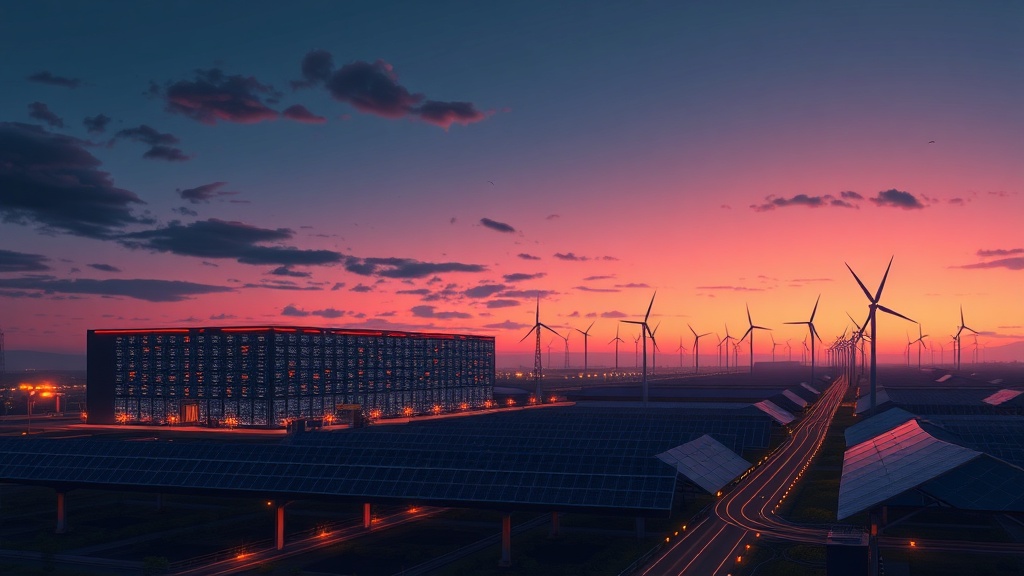
Artificial intelligence entered 2026 as both a climate villain and a climate hero, and the tension between those two roles is now the biggest story in the energy world. The same data centers powering chatbots, code assistants, and image generators are drawing electricity at a pace utilities did not plan for, yet AI is also quietly helping the grid, industry, and buildings run cleaner. Understanding that split is essential for anyone trying to make sense of where technology and the planet are headed this year.
The demand shock is real and accelerating
Global data center electricity demand is on track to exceed 1,000 terawatt-hours in 2026, roughly double the 2023 baseline. The International Energy Agency projects consumption climbing toward 945 TWh by 2030 in its base case and 1,200 TWh by 2035. Electricity use from AI-focused facilities specifically surged an estimated 50% in 2025 alone. Modern AI sites now draw anywhere from 100 to 750 megawatts each, driven mostly by inference workloads running on dense clusters of power-hungry GPUs. For context, data centers are projected to account for between 3% and 8% of all global electricity use by 2030.
The grid can’t keep up, and projects are stalling
The bottleneck in 2026 is no longer chips. It is power. Roughly half of global data center projects are facing delays tied to power limitations and grid-equipment shortages. Up to 11 gigawatts of capacity planned for this year remains stuck in the announcement phase, unbuilt, because developers cannot secure grid connections or generation. Many of these projects would need only 12 to 18 months of construction, yet they sit frozen. Utilities expect to spend more than $1.1 trillion on grid upgrades between 2025 and 2029 to catch up.
Big tech is chasing power, not just talent
The scramble for electricity is redrawing the map of where AI gets built. Microsoft committed $15.2 billion to the UAE and Meta is building a $10 billion campus in Louisiana, both clear signals that companies now follow available grid capacity the way they once followed engineering hubs. The shortage has also given rise to the “bring your own power” model, where developers build on-site generation, sometimes gas turbines, sometimes renewables paired with storage, to run for a few years until public grid infrastructure catches up. Nuclear, including next-generation small modular reactors, is back in serious conversation for the first time in decades.
Emissions are rising, but slower than the hype suggests
Emissions from data center electricity use are set to grow from about 180 million tonnes today to 300 million tonnes by 2035 in the IEA base case, and as high as 500 million tonnes in a faster “lift-off” scenario. Those are meaningful numbers, but they remain a small slice of total global emissions. The bigger climate question is what all this computing produces. If AI accelerates clean-energy deployment, materials science, and efficiency gains, its own footprint may prove a worthwhile trade.
The other side: AI as a climate tool
The overlooked half of the story is how much AI is already cutting energy waste elsewhere. The IEA estimates that widespread adoption of existing AI applications to optimize industrial processes could save energy equivalent to more than Mexico’s entire annual consumption. In 2026, AI systems are forecasting renewable output, balancing grids in real time, predicting equipment failures before they waste power, routing freight more efficiently, and helping design better batteries and materials. The technology that strains the grid may also be one of the best tools we have for making it cleaner and smarter.
The AI energy story in 2026 is not simply good or bad. It is a race between soaring demand and the efficiency, clean generation, and optimization that the same technology enables. Want to understand the tools driving all this and how to use them yourself? Explore our guides for plain-English breakdowns of AI’s biggest breakthroughs.


