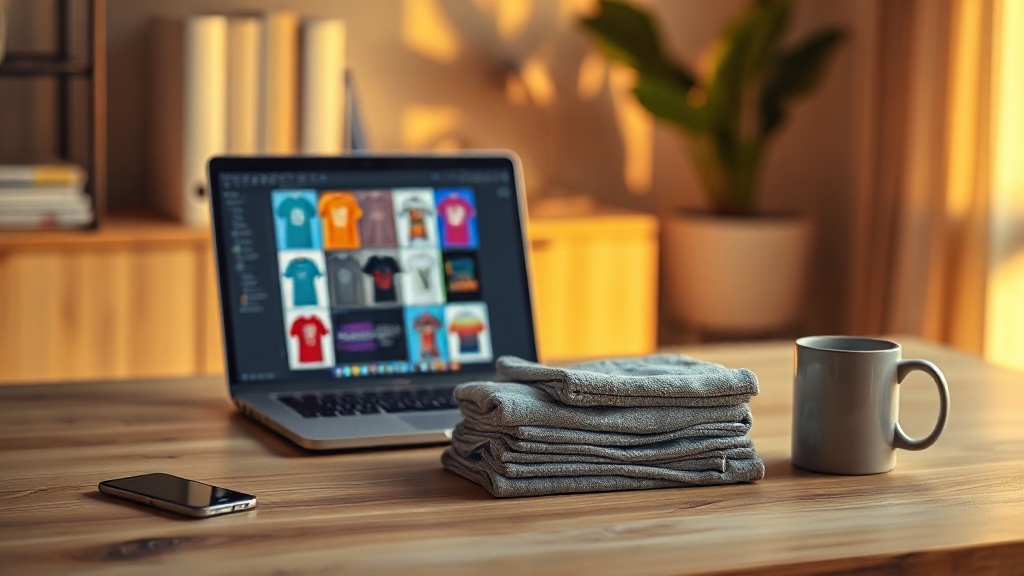
Print-on-demand used to mean fighting a designer, a spreadsheet, and a printer all at once. In 2026, AI does the grunt work. You research niches, generate designs, and publish products in an afternoon.
But “easy to start” is not the same as “easy to profit.” Let’s cut the hype and show you the real workflow, the real tools, and the real numbers.
Why AI Changed the POD Game
The old bottleneck was design. You either paid a freelancer $30 a shirt or wrestled with software for hours. Now a single prompt gives you a sellable concept in seconds.
That’s the good news and the bad news. Everyone has the same superpower now. So the money isn’t in making designs anymore. It’s in picking the right niche and moving fast.
Step 1: Find a Profitable Niche (Not a Crowded One)
Generic sells nothing. “Funny cat shirt” is a graveyard. You want micro-niches: a specific person, hobby, or identity that people wear like a badge.
Think “pickleball dad,” “night-shift nurse,” “disc golf minimalist,” or “retro synth producer.” Passion beats popularity. People pay a premium to signal who they are.
Tools that do the research for you
- ChatGPT — Ask it to brainstorm 20 sub-niches inside a hobby, plus the phrases those buyers actually use. Great for angles and listing copy.
- Alura — An Etsy keyword tool that shows real search demand and how many shops already compete for a term. Chase high-demand, low-competition gaps.
- Google Trends — Free. Confirm a niche is rising, not dying, before you commit.
Rule of thumb: if you can name the exact person who would wear it, you have a niche. If you can’t, keep digging.
Step 2: Generate Designs That Don’t Look AI-Generated
The trick in 2026 is workflow, not a single magic tool. Winners chain a few tools together, each doing one job well.
The design stack
- Midjourney — Best raw visual taste. Use it for illustrated, artistic, or vibe-heavy niches where generic equals invisible.
- ChatGPT image generation — Underrated for speed. Brainstorm, refine, and spin out variations in one conversation.
- Kittl — The workhorse for text-based merch: quotes, badges, retro type. Clean, editable, print-ready layouts.
- Canva — Fast mockups, tweaks, and background removal when you need editable shapes.
- MyDesigns — Turns approved concepts into product-ready files, mockups, and listings, then publishes to your shop.
Practical note: AI art on physical products lives in a legal gray zone, and platform rules shift. Always upscale to at least 4500×5400 px for apparel, and never generate anything that copies a brand, character, or living artist’s style. Trademarks will get your shop banned.
Step 3: Pick Where to Sell (and Who Prints It)
You have two decisions: the marketplace (where buyers find you) and the print supplier (who fulfills the order).
Marketplaces
- Etsy — Built-in buyer traffic, best for beginners. High competition, but real search volume.
- Amazon Merch on Demand — Massive reach, zero upfront cost, but you apply and get tiered.
- Shopify + TikTok Shop — You own the customer and keep more margin, but you must drive your own traffic.
Print suppliers
Printify and Printful merged in late 2024 under parent company Fyul, but they still run as separate services with separate pricing. Printify aggregates 80+ print shops, so base costs run cheaper. Printful is vertically integrated with more consistent quality control.
For pure margin, Printify usually wins. For premium products where quality complaints kill you, Printful earns its higher cost.
The Honest Numbers
Here’s where most gurus lie. Real POD profit margins sit between 20% and 40%. Niche or personalized products can hit 50%+, but competitive basics are thinner.
Concrete example: a Printify tee costs around $7 base. Sell it at $25 and you clear roughly $10-12 after fees. To make $961 a month on that product, you’re moving about 100 units. That’s real work, not a click-and-get-rich button.
The honest takeaway: your first 10 designs may sell nothing. The volume game rewards people who publish 50-100 quality listings and let winners rise. AI makes the volume possible; discipline makes it profitable.
Where the money actually leaks
Three things quietly eat your profit. Shipping is often the biggest, and it’s charged per item, so review the delivered price, not just the base cost. Marketplace fees stack up fast on Etsy once you add listing, transaction, and payment processing cuts. And ad spend can wipe out a thin margin if you scale before you know your numbers.
Price with all three baked in. A $19.99 shirt might look competitive and still lose you money once fees and shipping land. Do the math before you publish, not after.
Common Mistakes That Kill Beginners
Most people who quit POD make the same avoidable errors. Skip these and you’re already ahead of half the market.
- Going too broad. “Motivational quotes” competes with a million shops. “Powerlifting motivation for women over 40” competes with a handful.
- Skipping the sample order. You cannot judge print quality from a mockup. One faded, off-center shirt and your reviews tank.
- Chasing trends too late. By the time a meme is everywhere, the window has closed and the trademark risk is highest.
- Quitting at 10 listings. This is a volume-and-data game. Publish more, kill losers fast, scale winners.
Getting Started This Week
- Pick one micro-niche you actually understand. Validate demand with Alura and Google Trends.
- Generate 10 designs using Midjourney or ChatGPT for art, Kittl for text-based merch.
- Open free accounts on Etsy (or Amazon Merch) and connect Printify or Printful.
- Publish 10-20 listings with keyword-rich titles ChatGPT helped you write.
- Order one sample of your best design. Quality control is non-negotiable; a bad print kills your reviews.
- Track what sells for 30 days, then double down on winners and cut the dead weight.
The Bottom Line
AI print-on-demand in 2026 is a legitimate side income, not a lottery ticket. The barrier to entry collapsed, which means the edge is now speed, niche selection, and consistency, not artistic talent.
Move fast, stay specific, and treat the honest margins as a feature, not a flaw. Slim margins scare off the lazy competition and leave room for people who actually show up.
Want the full playbook? AI Learning Guides has step-by-step eguides and courses that walk you through niche research, prompt recipes, and scaling a POD store from your first sale to a real income stream. Start learning at AI Learning Guides and turn this from an idea into a side hustle that pays.
Ready to actually make money with AI?
Reading is step one. Our step-by-step eguides and book bundles hand you the exact workflows, tools, and templates to start earning — without the guesswork. Grab a guide and put this to work today.
Want it all? The Complete Collection (20 books, $289) or the Wealth Mindset Trilogy ($79) bundle up the best of it.


