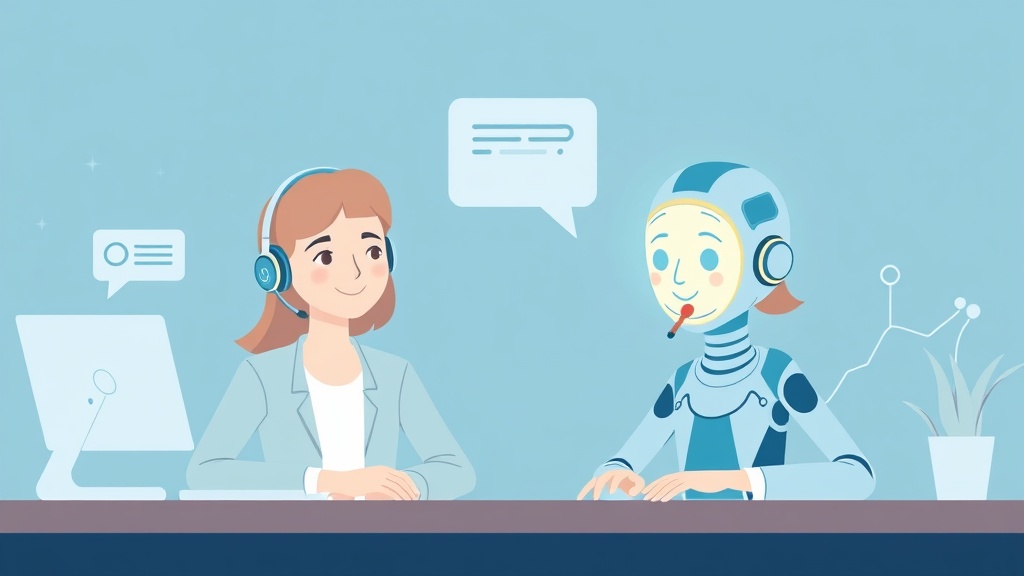
In 2026, AI has quietly become the front door of customer service. Two out of three support organizations now run AI agents, and the vast majority of routine questions never reach a human at all. But behind the headline numbers is a more honest story: AI is genuinely great at some things, still clumsy at others, and the companies winning are the ones who know the difference.
The numbers behind the boom
The shift has been fast. Roughly 66% of customer service organizations report using AI agents in 2026, up from 39% the year before, and the market for AI-powered customer service is projected to reach about $15.12 billion this year while growing at a 25.8% annual clip. Adoption is being driven by simple economics: an AI-handled resolution costs cents rather than dollars, and companies investing in these tools report an average return of roughly $3.50 for every $1 spent, with the strongest performers claiming far more.
Customers, for their part, aren’t as resistant as you might expect. Surveys in 2026 find that many people actively prefer a bot when what they want is an instant answer at 2 a.m. rather than a hold queue. Speed, not novelty, is the appeal.
What’s genuinely working
The clearest win is Tier-1 support: password resets, order tracking, return status, billing questions, and the hundreds of “where is my stuff” tickets that flood every business. AI-native platforms are resolving somewhere between 55% and 70% of first contacts on their own, and e-commerce brands that plug their bots directly into live order data are automating 70% or more of their support volume within a quarter.
The second win is speed. Resolved AI interactions frequently wrap up in under three minutes, compared with the four-to-seven-minute range typical of human-assisted contacts. And AI “copilots” that sit beside human agents, drafting replies and surfacing knowledge-base answers in real time, are boosting the productivity of the humans who remain rather than replacing them outright.
Where it still breaks
The biggest sore spot in 2026 is the handoff. Nearly all customer-service leaders say a smooth AI-to-human transition is essential, yet around 90% admit they struggle to do it well. When a bot can’t solve a problem and dumps the customer onto a human with no context, satisfaction craters, and the cost savings evaporate.
There’s also a measurement trap worth calling out. A chatbot can post an impressive “deflection rate” (the ticket ended without a human) while its true resolution rate, meaning the customer’s problem was actually fixed, is far lower. Analysts this year are pushing hard on that distinction, because a 90% deflection number can hide a 40% resolution reality. Complex, emotional, or multi-step issues, along with the risk of confident-but-wrong AI answers, remain firmly in human territory.
The winning model: hybrid, not all-or-nothing
The data keeps pointing to the same conclusion. Pure-AI handling lands slightly below human agents on customer satisfaction, but hybrid flows, where AI takes the routine load and hands off cleanly to people for the hard stuff, close almost all of that gap. The lesson for businesses in 2026 isn’t “replace your team with a bot.” It’s “let AI absorb the repetitive volume so your people can focus on the conversations that actually need a human.” The most sophisticated deployments this year go a step further with agentic systems that don’t just answer questions but take action, such as issuing a refund, updating a shipping address, or rebooking an appointment, all with proper guardrails and a clear paper trail. Those deeper backend integrations are what push resolution rates from the 55-70% band up into the 70-85% range.
Crucially, the businesses seeing the best results treat their AI like a new hire that needs training, not a magic switch. They feed it clean, up-to-date help documentation, review the conversations it gets wrong, and tighten its instructions over time. The gap between a mediocre bot and a great one usually comes down to how much care goes into that ongoing coaching, not the underlying model.
What this means for you
Whether you’re a small business owner adding a chatbot or a professional trying to stay ahead of the curve, the practical takeaway is to start with your highest-volume, lowest-risk questions, measure true resolution rather than vanity deflection, and design the human handoff before you launch, not after. Used that way, AI support is one of the clearest ROI stories in the whole AI landscape right now.
Want to actually implement this instead of just reading about it? Our step-by-step AI guides walk you through choosing tools, writing prompts, and setting up automations that work. Explore our guides to put AI to work in your business today.


