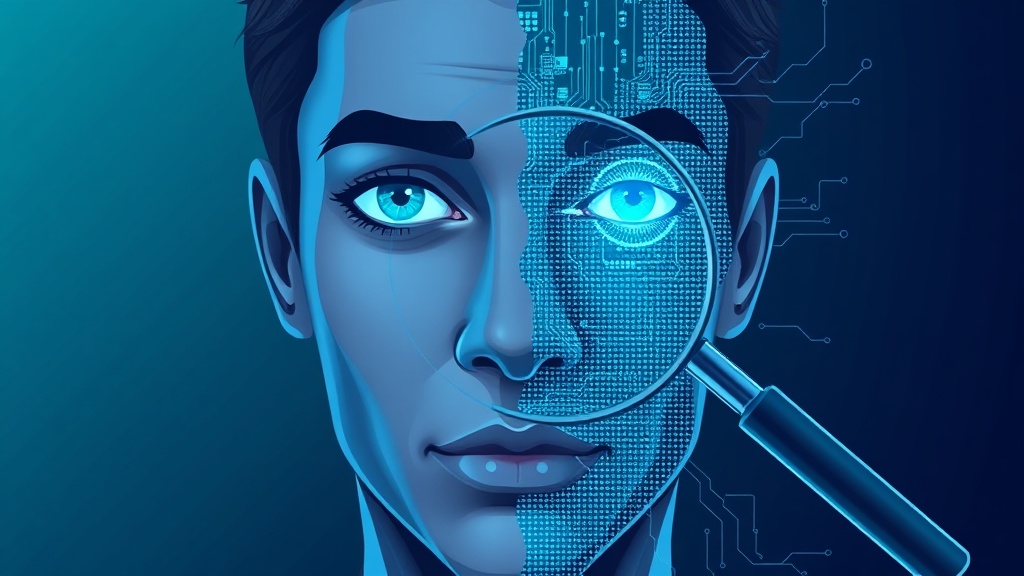
In 2026, the hardest question online is no longer “is this true?” but “is this real?” AI-generated video, cloned voices, and synthetic faces have crossed a threshold where the average person simply cannot tell them apart from the genuine article. One widely cited study by biometric firm iProov found human accuracy at spotting a modern deepfake sits at roughly 0.1 percent. That is not a typo. The good news: a fast-growing ecosystem of detection tools, provenance standards, and simple habits is fighting back, and you can start protecting yourself today.
The scale of the problem is exploding
Deepfakes have jumped from a novelty to a business risk. Analysts tracking the space report that deepfake fraud attempts have climbed dramatically over the past three years, and Gartner’s 2025 survey found that 62 percent of organizations experienced some form of deepfake attack in the prior 12 months. The financial damage is real: the average deepfake fraud incident is now estimated to cost around $500,000, and in one infamous 2024 case, scammers used AI-generated video to impersonate executives on a conference call and convinced a finance worker to transfer roughly $25 million. Forrester’s 2026 outlook warns that eroding trust in visual media, the foundation of journalism, legal evidence, and everyday communication, is one of the defining challenges of the year, with concerns spilling into coverage of election-season misinformation.
How to spot a deepfake: practical tips
Detection technology is powerful, but you carry the first line of defense. No single clue is proof on its own, so look for a cluster of these warning signs:
- Watch the eyes and blinking. Deepfakes often blink too much, too little, or in a mechanically regular way. Eyes may look fixed, glassy, or disconnected from what is happening in the scene.
- Check lip-sync and audio. If the words do not line up precisely with the mouth, or the voice sounds slightly flat, over-smooth, or oddly paced, be suspicious.
- Look for edges and lighting. Blurring, flickering, or a faint “seam” around the face, hairline, or where the head meets the neck is a classic giveaway. Watch for lighting on the face that does not match the background.
- Inspect the hands, teeth, and jewelry. Fine details are still hard for AI. Warped fingers, shifting teeth, or earrings that morph between frames are red flags.
- Trust context over polish. The single most important habit in 2026: if a video or call pressures you to send money or credentials urgently, treat it as a threat regardless of how convincing it looks. Verify through a second channel, such as calling the person back on a known number.
The tools fighting back
Because detection alone becomes an endless arms race, the industry is shifting toward proving what is real at the moment of creation. Google DeepMind’s SynthID embeds an imperceptible watermark into content made with Google’s AI tools, and it is designed to survive compression, cropping, and screenshots. Meanwhile, forensic detectors that analyze pixel-level artifacts continue to improve, and the market for them is growing quickly, with new commercial products launching throughout 2026 for media, banking, and hiring, where synthetic-identity scams are rising.
Content Credentials and the provenance push
The most promising long-term fix is provenance. The C2PA standard (Coalition for Content Provenance and Authenticity), backed by Adobe, Microsoft, Intel, Arm, and Truepic, powers “Content Credentials”: a tamper-evident record that travels with an image or video and describes where it came from, what edited it, and whether AI was involved. In 2026, support is live across Adobe tools, OpenAI outputs, and Google’s Gemini, Search, Chrome, and Photos verification surfaces, with camera makers like Canon adding provenance for newsrooms. The catch is real, though: credentials can be stripped when files are re-uploaded through apps like WhatsApp or Facebook, and the record only reflects what the signer chose to disclose. Provenance proves authenticity; it does not by itself catch a liar.
What this means for you
The takeaway for 2026 is not paranoia but literacy. Assume any face or voice can be faked, slow down before acting on urgent media, verify important requests through a second channel, and look for Content Credentials when a platform offers them. Trust is becoming something we verify rather than assume, and the people who learn these habits now will be far harder to fool.
Want to go deeper on AI safety, verification, and using these tools responsibly? Explore our guides for plain-English, practical playbooks that turn AI headlines into skills you can actually use.


