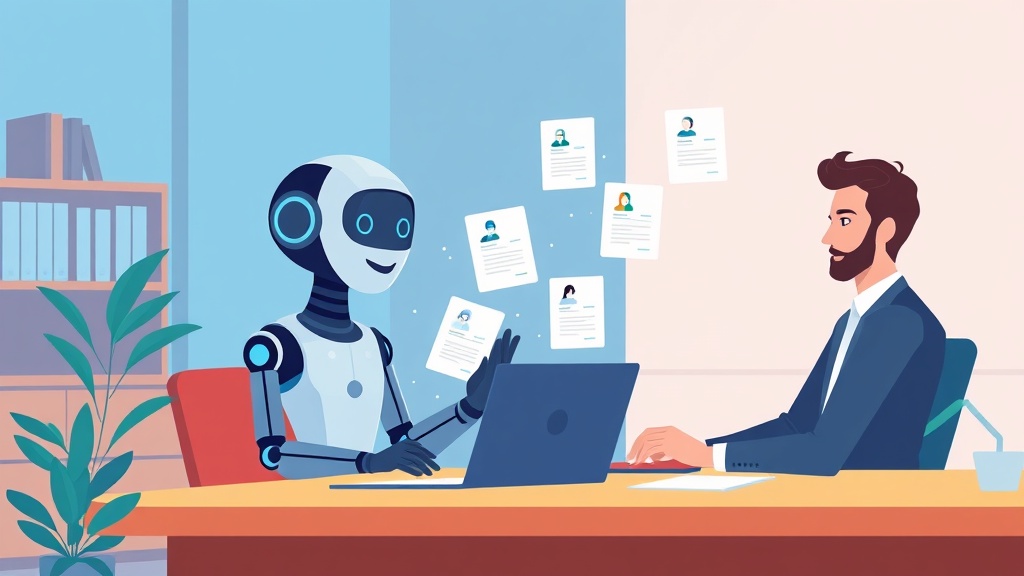
2026 is the year AI stopped being a novelty in human resources and became the operating system of hiring. Adoption of AI in HR nearly doubled in a single year, jumping from 26% to 43% of organizations, and recruiting has emerged as the single most common place teams put that technology to work. Yet beneath the surge is a widening gap: recruiters have gone all-in, while a large share of candidates say they’d rather not apply at all.
Adoption Doubled, and Recruiting Leads the Way
According to SHRM’s State of AI in HR 2026 report, drawn from a survey of more than 1,700 HR professionals, AI use in HR climbed from 26% to 43% of organizations in just twelve months. Company size still shapes the story sharply: roughly 60% of extra-large employers have deployed AI in HR, compared with just 33% of small businesses and 35% of midsize firms.
Recruiting is where the action is. HR teams report AI is most common in recruiting (27%), followed by HR technology (21%), learning and development (17%), and employee experience (14%). The everyday applications are practical rather than flashy: resume parsing, interview scheduling, drafting job ads, and personalized recruiter messaging. Nearly 9 in 10 HR professionals using AI in recruiting say it saves them time or boosts their efficiency.
Recruiters Have Gone All-In
The numbers on the hiring side are staggering. Industry surveys in 2026 show that 96% of hiring professionals now use AI in some part of their recruiting tasks, and 98% say AI has improved the hiring process at their organization. About 70% report it helps them move faster and make stronger decisions with fewer recruiter resources.
The efficiency case is real. Companies deploying AI across the funnel report average cost-per-hire reductions around 30%, with some North American employers citing 40%, and time-to-hire cut by 25% to 50%. The AI recruitment market itself is projected to grow from roughly $8.2 billion in 2025 to more than $15 billion by 2030.
The Rise of Autonomous Recruiting Agents
The most notable shift in 2026 is the move from AI tools to AI agents. Talent leaders are increasingly onboarding autonomous agents as if they were team members, complete with digital identities, permissions, and defined responsibilities. These agents screen applicants, analyze candidates’ public footprints, run AI-powered mock or first-round voice interviews, and hand shortlists to human recruiters. In a striking data point, when candidates were given a real choice between a human recruiter and an AI voice agent, 78% chose the AI, often because it was faster and available around the clock.
The Trust Gap and the Fraud Problem
For all the enthusiasm, candidates are wary. Roughly 66% of U.S. adults say they would not apply for a job that uses AI in hiring, even as recruiters lean in harder. That disconnect is the central tension of 2026: efficiency for employers versus comfort and fairness for applicants.
Fraud is compounding the anxiety. About 91% of recruiters say they’ve spotted or suspected candidate deception, and 74% are more worried about fake credentials than a year ago, fueled partly by AI-generated resumes and deepfake interview tactics. In response, 61% of companies now run software to detect AI use during interviews, turning hiring into something of an AI-versus-AI arms race.
What It Means for 2026 and Beyond
The takeaway is not that AI is winning or losing in HR, but that the organizations pulling ahead are the ones pairing automation with transparency. Notably, Gartner and others report that a large majority of HR leaders have yet to see significant business value from AI, suggesting the winners will be those who redesign processes rather than simply bolt AI onto old ones. Communicating clearly about how AI is used, keeping humans in the loop on final decisions, and auditing tools for bias are becoming table stakes, not extras.
Whether you’re a recruiter, a people leader, or a job seeker trying to stand out in an AI-screened world, understanding these systems is now a core career skill. If you want to get ahead of the curve, explore our guides for plain-English playbooks on using AI in hiring, HR, and your own job search.


